







Understanding Different Types of Hydraulic Jacks

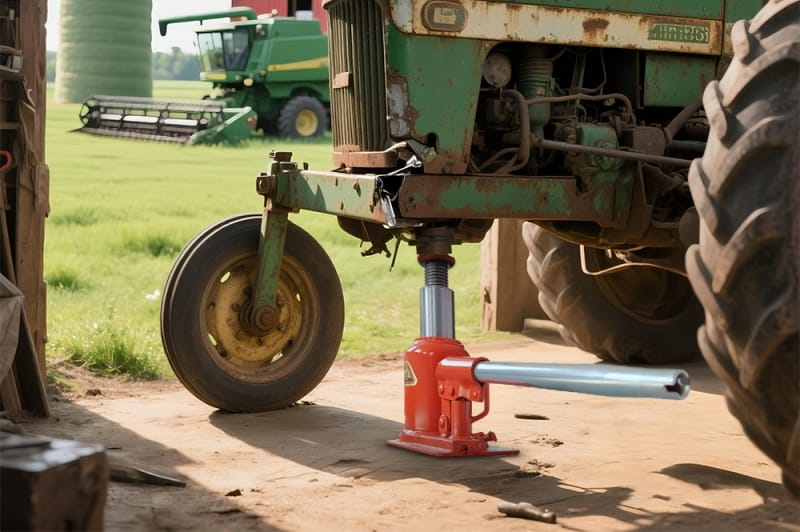
Hydraulic Jacks serve as essential lifting equipment across diverse industries, providing efficient solutions for heavy loads. Their significance lies in ensuring secure lifting operations while minimizing risks of accidents and injuries. These jacks find applications in construction, mining, aerospace, and material handling sectors. Hydraulic Jacks are pivotal in the automotive industry for vehicle maintenance tasks, showcasing their versatility and reliability in various operational contexts.
Types of Hydraulic Jacks
Image Source: unsplash
Bottle Jacks
Hydraulic bottle jacks, also known as whiskey jacks, feature a compact design with a bottle shape. These jacks consist of a vertical lifting ram equipped with a support pad at the top. A small reservoir supplies hydraulic fluid to the main cylinder beneath the ram. By interconnecting multiple bottle jacks evenly across the base of a load, they can form a vertical hydraulic jack system for lifting heavy objects with a broad base like houses. The versatility of bottle jacks allows them to be used both vertically and horizontally, providing flexibility in various lifting applications.
Design and Structure:
Compact bottle-shaped design
Vertical lifting ram with support pad
Hydraulic fluid supplied to the main cylinder
Common Uses:
Lifting vehicles off the ground vertically
Forming vertical hydraulic jack systems for heavy loads
Providing support for different sized vehicles
Advantages and Disadvantages:
Advantages:
Versatile in usage
Compact and easy to store
Available in various sizes for different vehicles
Disadvantages:
Can be more unstable compared to other types of jacks
Weight restricted for specific lifting purposes
Floor Jacks
Floor jacks are essential tools in automotive repair shops, construction sites, and industrial settings due to their high lifting capacities and robust construction. These hydraulic jacks offer precise and efficient lifting capabilities for heavy vehicles, machinery, and equipment. One key advantage of floor jacks is their ability to provide substantial lifting force while maintaining portability and ease of use.
Design and Structure:
Sturdy construction for heavy-duty applications
Hydraulic mechanism for efficient lifting operations
Common Uses:
Lifting heavy vehicles during maintenance tasks
Supporting machinery in industrial environments
Advantages and Disadvantages:
Advantages:
High lifting capacities suitable for heavy loads
Portable design for easy maneuverability
Disadvantages:
Require stable ground surfaces for optimal performance
Scissor Jacks
Scissor jacks are popular choices for vehicle owners due to their compact size and ease of use. These hydraulic jacks operate on a scissor-like mechanism that enables vertical lifting with minimal effort. Scissor jacks are commonly found in car emergency kits or as standard equipment in many vehicles, providing convenient solutions for roadside tire changes or minor repairs.
Design and Structure:
Scissor-like mechanism for vertical lifting
Compact size for storage in vehicles
Common Uses:
Emergency tire changes on roadsides
Minor vehicle repairs or maintenance tasks
Advantages and Disadvantages:
Advantages:
Compact and lightweight design for portability
Easy operation without extensive technical knowledge required
Disadvantages:
Limited weight capacity compared to other hydraulic jack types
Hi-Lift Jacks
Design and Structure
The Hi-Lift Jacks are renowned for their robust construction and high lifting capacities, making them indispensable tools in various industrial settings. These jacks typically feature a long, vertical steel beam with a climbing pin assembly that allows for precise adjustments during lifting operations. The sturdy base plate provides stability, ensuring safe and efficient lifting of heavy loads.
Common Uses
Hi-Lift Jacks are commonly utilized in off-road vehicles and agricultural machinery for lifting tasks in challenging terrains.
These jacks find applications in construction sites for raising structural components like beams and columns to desired heights with accuracy.
Advantages and Disadvantages
Advantages:
High lifting capacities suitable for heavy-duty applications.
Precise adjustment mechanisms for controlled lifting operations.
Versatile usage in diverse industries due to their robust design.
Disadvantages:
Require proper training for safe operation due to their powerful lifting capabilities.
Limited portability compared to other types of hydraulic jacks.
Toe Jacks
Design and Structure
Toe Jacks are compact hydraulic jacks designed with a low-profile structure ideal for fitting under tight spaces. These jacks feature a toe or foot at the base that provides stability during lifting tasks. The hydraulic pump mechanism enables smooth vertical movement, allowing precise positioning of heavy equipment or machinery.
Common Uses
Toe Jacks are commonly employed in machine shops and manufacturing facilities for aligning heavy machinery during installation or maintenance.
These jacks find applications in the transportation industry for loading and unloading cargo containers with ease.
Advantages and Disadvantages
Advantages:
Low-profile design facilitates access to confined spaces.
Precise positioning capabilities ensure accurate alignment of equipment.
Enhanced stability due to the toe design, reducing the risk of slippage during lifting operations.
Disadvantages:
Limited weight capacity compared to larger hydraulic jacks.
Require level surfaces for optimal performance, limiting versatility in uneven terrains.
Trolley Jacks
Design and Structure
Trolley Jacks, also known as floor jacks with wheels, are versatile hydraulic tools equipped with a handle and swivel casters for easy maneuverability. These jacks feature a horizontal piston connected to a pumping system that raises the vehicle or load smoothly. The sturdy frame ensures stability while providing reliable support during lifting tasks.
Common Uses
Trolley Jacks are widely used in automotive repair shops for raising vehicles during maintenance procedures such as tire changes or brake inspections.
These jacks find applications in warehouses and distribution centers for handling palletized goods efficiently.
Advantages and Disadvantages
Advantages:
Easy mobility facilitated by the swivel casters, allowing convenient transportation within workspaces.
Quick elevation of vehicles or loads due to efficient pumping systems.
Versatile applications across different industries, enhancing operational flexibility.
Disadvantages:
Regular maintenance required to ensure optimal performance over time.
Limited weight capacity compared to heavier-duty hydraulic jack models.
Pneumatic Jacks
Design and Structure
The Pneumatic Jacks operate using compressed air to provide the necessary force for lifting heavy loads. These jacks consist of an air cylinder that compresses air to generate pressure, which is then transferred to a hydraulic fluid reservoir. The hydraulic fluid, under pressure from the compressed air, moves into the main cylinder, pushing a piston upwards to lift the load effectively.
Common Uses
Pneumatic Jacks are commonly employed in automotive workshops for lifting vehicles during repair and maintenance tasks.
These jacks find applications in industrial settings for supporting heavy machinery and equipment during assembly or servicing operations.
Advantages and Disadvantages
Advantages:
Efficient lifting capabilities due to the use of compressed air.
Quick operation compared to manual hydraulic jacks.
Suitable for environments where electricity is not readily available.
Disadvantages:
Require proper maintenance of the pneumatic system for optimal performance.
Limited portability compared to manual hydraulic jacks due to the need for an air compressor.
Strand Jacks
Design and Structure
Strand Jacks are specialized hydraulic lifting systems designed with multiple high-strength steel cables known as strands. These cables work in unison to lift heavy structures vertically by synchronizing their movements through a central control system. The robust construction of strand jacks ensures stability and precision during lifting operations, making them ideal for handling complex structural components.
Common Uses
Strand Jacks are extensively used in bridge construction projects for lifting and positioning large segments with accuracy.
These jacks find applications in building construction for erecting tall structures like skyscrapers by incrementally raising sections into place.
Advantages and Disadvantages
Advantages:
High load-bearing capacity suitable for heavy construction projects.
Precise control over lifting operations through advanced synchronization mechanisms.
Enhanced safety features such as overload protection systems.
Disadvantages:
Complex setup requiring skilled operators for efficient usage.
Higher initial investment costs compared to traditional hydraulic jacks.
Inflatable Jacks
Design and Structure
Inflatable Jacks, also known as air bags or pneumatic lifts, utilize compressed air to inflate flexible rubber bladders that serve as lifting elements. When inflated, these bladders exert force against the load, raising it off the ground securely. The versatility of inflatable jacks lies in their ability to conform to irregular shapes or surfaces, making them ideal for various lifting scenarios.
Common Uses
Inflatable Jacks are commonly used in rescue operations by emergency services to lift vehicles involved in accidents safely.
These jacks find applications in industrial maintenance tasks where traditional jack designs may not fit due to space constraints.
Advantages and Disadvantages
Advantages:
Flexible design capable of adjusting to different load shapes.
Lightweight and portable for easy transportation between job sites.
Safe operation without risk of scratching or damaging lifted objects.
Disadvantages:
Limited weight capacity compared to other types of hydraulic jacks.
Susceptible to punctures or damage if used on sharp or uneven surfaces.
Operational Principles of Hydraulic Jacks
Basic Hydraulic Principles
Pascal’s Law states that pressure exerted at any point in a confined fluid is transmitted undiminished in all directions throughout the fluid. This fundamental principle forms the basis for the operation of hydraulic systems, including hydraulic jacks.
Hydraulic Fluid Dynamics
Hydraulic systems rely on the dynamics of fluids to transmit force effectively. When pressure is applied to a confined fluid, it generates a force that can be utilized to lift heavy loads using hydraulic jacks.
Mechanisms of Different Types
Bottle Jacks
Bottle Jacks operate by utilizing hydraulic fluid to create pressure, allowing for vertical lifting through a piston mechanism. These jacks are commonly used for lifting vehicles and other heavy objects with stability and precision.
Floor Jacks
Floor Jacks employ a hydraulic mechanism to raise heavy loads efficiently. The sturdy construction and high lifting capacities make them ideal for various industrial applications, ensuring safe and reliable lifting operations.
Scissor Jacks
Scissor Jacks function based on a scissor-like mechanism that enables vertical lifting with ease. Their compact size and straightforward operation make them popular choices for vehicle owners needing quick solutions for minor repairs or tire changes.
Hi-Lift Jacks
Hi-Lift Jacks, known for their robust construction, utilize a climbing pin assembly to provide precise adjustments during lifting tasks. These jacks are essential in off-road vehicles and construction sites where high lifting capacities are required.
Toe Jacks
Toe Jacks, designed with a low-profile structure and an adjustable toe, offer precise positioning capabilities in tight spaces. Widely used in manufacturing facilities and transportation industries, these jacks ensure stable lifting operations.
Trolley Jacks
Trolley Jacks, equipped with swivel casters for mobility, feature a horizontal piston connected to a pumping system for smooth elevation of vehicles or loads. Their versatility makes them indispensable tools in automotive repair shops and warehouses.
Pneumatic Jacks
Pneumatic Jacks, powered by compressed air, provide efficient lifting capabilities suitable for automotive workshops and industrial settings. The use of compressed air ensures quick operation without the need for electricity, enhancing productivity.
Strand Jacks
Strand Jacks, incorporating multiple high-strength steel cables, offer precise control over lifting operations in complex projects such as bridge construction or building erection. Their advanced synchronization mechanisms ensure safe and accurate lifting processes.
Inflatable Jacks
Inflatable Jacks, utilizing compressed air to inflate rubber bladders, conform to irregular shapes or surfaces during lifting tasks. Lightweight and portable, these jacks find applications in rescue operations and industrial maintenance scenarios.
Practical Usage and Safety Tips
Image Source: pexels
Proper Usage Techniques
Pre-Use Inspection
Inspect
Check the hydraulic fluid level to ensure optimal performance during lifting operations.
Verify that all moving parts are functioning correctly to prevent accidents.
Correct Positioning
Position the hydraulic jack on a stable and level surface before initiating any lifting tasks.
Ensure the load is centered on the jack’s lifting point to maintain balance and stability.
Adjust the jack’s position as needed to align with the lifting area securely.
Lifting Procedures
Engage the hydraulic jack according to the manufacturer’s instructions for safe operation.
Pump the handle steadily to raise the load, avoiding sudden or jerky movements.
Monitor the lifting process closely and make adjustments as necessary for precision.
Safety Measures
Load Capacity Awareness
Identify and adhere to the maximum weight capacity specified by the hydraulic jack manufacturer.
Avoid overloading the jack beyond its designated limit to prevent structural failure or accidents.
Consult weight charts or guidelines for different loads to ensure safe lifting practices.
Regular Maintenance
Schedule routine inspections and maintenance checks to keep the hydraulic jack in optimal condition.
Clean and lubricate moving parts regularly to prevent corrosion and ensure smooth operation.
Replace worn-out components promptly to maintain safety standards and prolong the jack’s lifespan.
Emergency Protocols
Establish emergency procedures in case of unexpected incidents during lifting operations.
Train personnel on proper emergency protocols, including lowering loads safely in emergencies.
Keep a first aid kit and emergency contact information readily available at all times for immediate assistance.
Upon reviewing the diverse array of hydraulic jacks discussed, it becomes evident that each type serves a unique purpose in lifting heavy loads efficiently. Understanding the operational principles, particularly Pascal’s Law, is crucial for users to grasp the underlying mechanics of these jacks. By adhering to safety guidelines and prioritizing regular maintenance, individuals can ensure the safe and effective usage of hydraulic jacks